This blog post has been sitting in my drafts for a while, but I can’t hold it back any longer. Lately, my Instagram feed has been flooded with hair-related posts. Just the other day, I stumbled upon a post by Lauren Speed (yeah, I’m a Love is Blind junkie and a certified Hamilton megafan – no other couple on the show even comes close, right?). She said, “Something is so personal about hair”, and I couldn’t agree more. Hair holds a unique significance and value for each of us.
I also recently read a sentence in a book that stuck with me. I have to admit, I’ve been on a hair kick lately (okay, maybe more than a little obsessed). It said, “Hair for a black woman is a sign of beauty,” which got me thinking about how we view hair in my community. Whenever I contemplate a new haircut and could use an extra boost, I tell myself, “Eh, it’s just hair. It’ll grow back.” But truth is, it’s way more than “just hair”.
Hair as a Symbol of Beauty, Identity, and Social Status
In Haiti, however, I believe that hair isn’t solely about beauty; it sometimes serves as a symbol of wealth and even social status. It can reflect the kind of family you come from. I remember those kids, most of them light-skinned, in high school whose hair was labeled as “bon cheve” [good hair]. For some reason, we tended to assume that those in higher social classes often had softer, more luxurious hair. But if we’re being honest, the more affluent one is, the better they can afford the care and maintenance of their hair.
And let’s not forget, Haitian men love hair. Some of them are truly obsessed with it. Most won’t be able to tell the difference between your natural hair and a wig, but they certainly appreciate seeing hair being flaunted. Many women I know had to prepare a full speech just to get their partner to “accept” a change in hairstyle. The pressure on us regular women, simply aiming for a harmonious existence with decent hair, can be substantial.
My Hair Journey: From Validation to Self-Care
For a long time, beautiful hair was considered to be long, straight, and full. With the evolution of natural hair, beauty ideals for black women shifted towards luxurious curls. Women with 4c hair had to fight for recognition, as their coils weren’t unequivocally labeled as beautiful. Mine does not check any of these boxes.
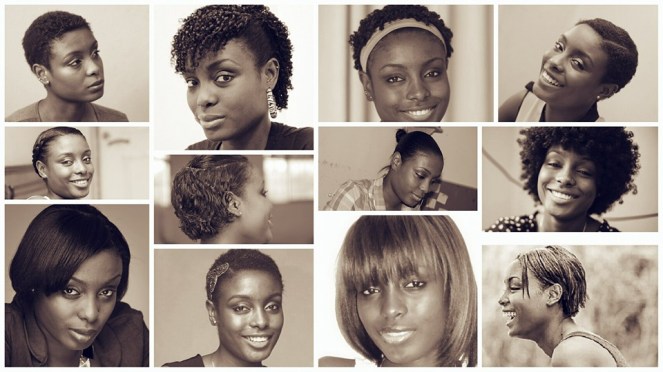
My hair has seen various lengths and styles over the years. In my twenties, I felt the need for validation. I wanted to prove that I could be beautiful with or without long hair. Entering my thirties, self-care has become a priority. Now, my focus has shifted to overall health while still maintaining my hair relaxed. Being the only person in my close circle with relaxed hair, I feel the weight of expectations and even judgement sometimes. Nonetheless, I’m comfortable with my choice—it’s what works for me. My hair is now relaxed and colored, which requires extra work to get it to thrive.
While I’m no expert, I’m committed to understanding my hair better and providing it with the best care possible. I’ve immersed myself in YouTube videos from my favorite #HairFluencers (Check out Style Domination and Hairlicious Inc.) and extensively researched the topic . Recognizing when my hair is dry and brittle, and knowing how to address it, has been empowering journey.
Seeking the Perfect Balance: Relaxed, Colored, and Healthy Hair
Over the past few months, I’ve purchased different hair care products and started regulating factors such as heat usage and the timing of my relaxers. Just recently, I made an even more drastic move. I decided to fully switch up my hair care regimen once again, opting for more high-end options.
Currently, I’m dedicated to maintaining a simple routine. I tend to stick with one brand, and for a while, I’ve been loyal to “Biolage.” Now, I’m transitioning to Kerastase, integrating select products from “Olaplex.” My regimen involves washing every two weeks with a deep moisturizer, moisturizing and sealing every other day, and stretching my relaxers to 10 weeks—never less than 8 weeks nor more than 12 weeks.
I’ve documented the “before” phase, and my aim is to adhere rigorously to this routine. Hopefully, in the span of 3 to 6 months, I’ll return to share the results. This journey isn’t just about tending to my hair, but also about rediscovering myself and embracing my roots in a new way. I do not know for sure how much length I will be able to retain, as genetics play a significant role. Yet, now more than ever, I’m choosing to prioritize health over appearances and societal expectations.
 Thriving Through the Thirties
Leave a comment